October Is More Than Pink
Why We Need to Talk About Women's Health
Breast Cancer Awareness Month gives us an opportunity to start a much bigger conversation about women's health. Every October, we see pink ribbons, pink clothing and reminders to check for breast cancer. But perhaps the bigger question is: how well do we actually know our own bodies?
Breast Cancer Awareness Month brings attention to things we should already be thinking about - not just in October. It reminds us to pay attention to changes in our bodies and to take notice when something doesn't feel quite right. Since October gives us an opportunity to talk about issues that affect our health, breast cancer is a good place to start.
Breast cancer occurs when cells in the breast develop abnormal changes and begin to grow uncontrollably. These cells can form a tumour and, if the cancer progresses, may spread to surrounding tissues or to other parts of the body. At its earliest stages, breast cancer may not cause noticeable symptoms. This is one of the reasons appropriate breast cancer screening and knowing what is normal for your own body are important. When changes do occur, they may include:
- A new lump or thickening in the breast or armpit area
- Changes in the size, shape or appearance of the breast
- Skin changes such as dimpling, puckering, scaling or redness
- Changes to the nipple, such as a newly inverted nipple
- Unusual nipple discharge
Not every change means cancer, however a new or unusual change should not simply be ignored. It is important to seek medical advice so that you can find out what is happening and, if necessary, what can be done about it.
The thought of having cancer is frightening for most of us. It can make us think about everything we could lose and make us feel as though our lives have suddenly been put on hold. But fear should not stop us from paying attention to our health. We don't need to live in fear of cancer. We need to learn to notice, ask questions and seek help when something doesn't feel right.
The conversations around women's health shouldn't only happen when something goes wrong. So often, we keep quiet about things that concern us because we are afraid of appearing vulnerable, afraid of what people might think, or simply because we have become accustomed to putting ourselves last. Talking openly about our health can help someone else realise that they are not alone. It can encourage another woman to make that appointment she has been postponing. It can give someone the courage to ask a question they have been afraid to ask, and it can create a safe space where women can share their experiences without feeling judged.
As we begin October, think about one thing about your health that you have been meaning to pay more attention to. Maybe it's a check-up you've been postponing. Maybe it's a change you've noticed. Maybe it's simply taking better care of yourself. This month doesn't have to be only about wearing pink. It can be about knowing our bodies, paying attention to changes and taking our health seriously.
Breast cancer is our starting point, but over the coming weeks we'll also talk about cancer more broadly, prevention, early action, emotional wellbeing and the importance of women making their health a priority. Our health deserves our attention before something goes wrong.

Beyond Breast Cancer
Breast Cancer Is Not the Only Cancer Women Need to Know About
Here is a question worth asking – How much do we know about the other cancers that can affect us?
Think about it. We know when our favourite supermarket is having a sale, we remember birthdays, keep track of school activities and somehow manage to know what's happening in everyone else's lives. But how much attention do we give to understanding our own health?
Cervical cancer, for example, affects the lower part of the uterus, known as the cervix. What makes this cancer particularly important to talk about is that most cases are linked to persistent infection with certain types of the human papillomavirus (HPV). Vaccination and appropriate screening can help prevent many cases. Yet how many of us know the difference between an HPV test and a Pap smear, or when we should be screened?
Then there's ovarian cancer, which can be particularly difficult to recognise because some of its symptoms seem so ordinary. Persistent bloating, feeling full unusually quickly, abdominal discomfort or changes in bathroom habits can easily be dismissed as digestive problems. Most of us have experienced some of these things at one time or another. The important difference is when symptoms are new, persistent or unusual for us.
Uterine or endometrial cancer affects the lining of the uterus. One of its most important warning signs is abnormal vaginal bleeding, particularly bleeding after menopause. Yet some women may dismiss unexpected bleeding as just another hormonal change. Bleeding after menopause should always be checked.
What about colorectal cancer? We don't often think of it as a women's cancer, but it affects women too. Changes in bowel habits, blood in the stool, unexplained weight loss or persistent abdominal discomfort are things worth discussing with a healthcare professional. Screening can also help detect some changes before cancer develops.
Lung cancer is another one we tend to associate mainly with smoking. While smoking is the biggest risk factor, people who have never smoked can develop lung cancer too. A persistent cough, coughing up blood or unexplained breathlessness should never simply be ignored.
Now, before we all start worrying about every ache, pain or unusual feeling, here's something important to remember: Having a symptom doesn't automatically mean you have cancer. Many of these symptoms can be caused by other, less serious conditions. The point isn't to panic. It's to recognise when something is unusual and seek medical advice rather than making assumptions.
One Cancer Test Doesn't Check for Everything
This is something many of us may not realise. There isn't one routine test that checks for every type of cancer. Different cancers have different risk factors, warning signs and screening methods. Some have effective screening programmes, while others do not have reliable routine screening tests for people without symptoms.
That is why it's important to have conversations with healthcare professionals about our age, family history, personal risks and which screenings may be appropriate for us. We shouldn't wait for symptoms before having those conversations. We spend so much time looking after other people, meeting deadlines and making sure everything around us is running smoothly. Surely our own health deserves some of that attention?
Awareness doesn't mean being afraid of every disease. It means having enough knowledge to make informed decisions about our health.

Breast Cancer
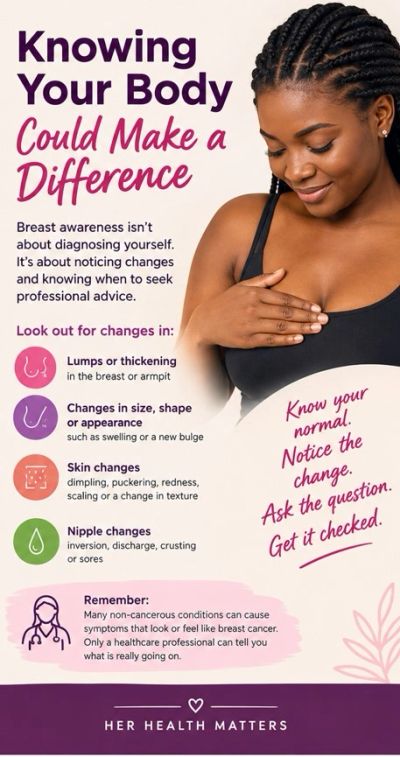
Knowing Your Body Could Make a Difference
Breast awareness isn't about diagnosing yourself. It's about noticing changes and knowing when to seek professional advice.
Your breasts don't have to look or feel exactly the same every day. Hormonal changes, age, pregnancy, breastfeeding and other factors can all affect how they look and feel. What matters is knowing what is normal for you and paying attention when something changes. A change does not automatically mean cancer. Many breast changes are caused by conditions that are not cancerous. However, a new or unusual change should be checked by a healthcare professional rather than being ignored or self-diagnosed.
A New Lump or Thickening
A new lump or area of thickening in the breast or armpit is one of the changes that should be assessed. People sometimes describe breast cancer lumps as hard, firm or less mobile than the surrounding tissue. However, there is no reliable way to identify a cancerous lump simply by how it feels. Some breast cancers may feel soft, tender or painful, while some benign lumps can feel quite firm.
Breast tissue can also naturally feel lumpy, particularly around hormonal changes and menstruation. The important thing is to pay attention to a new, persistent or noticeably different lump or area of thickening and have it assessed.
Changes in Size, Shape or Appearance
It is completely normal for one breast to be slightly different from the other. What deserves attention is a new or unexplained change in the size or shape of one breast. This might include a new swelling, bulge, distortion or other change that wasn't there before. A breast that suddenly becomes swollen, feels unusually heavy or changes noticeably in appearance should be assessed by a healthcare professional.
Skin Changes
Pay attention to new changes in the skin of the breast, including:
- Dimpling or puckering
- Persistent redness
- Scaling or flaking
- Thickening of the skin
- Changes in texture
- Swelling
One possible appearance is sometimes described as "peau d'orange", meaning the skin develops a texture that resembles the surface of an orange. These changes can have several causes, including infections and other non-cancerous conditions, but persistent or unexplained changes should be checked.
Nipple Changes
If your nipples have always been flat or inverted, that may simply be normal for you. A new change, however, deserves attention. This can include a nipple that was previously pointing outward and suddenly becomes inverted or changes direction. Unusual nipple discharge should also be assessed, particularly if it occurs without squeezing the nipple, comes from only one breast, or is clear or bloody.
Changes such as persistent crusting, scaling or sores around the nipple or areola should also be checked. In some cases, these changes can be associated with a rare type of breast cancer called Paget's disease of the breast.
But Here's Something Important...
You cannot determine whether a breast change is cancer simply by looking at it or feeling it.
Many non-cancerous breast conditions can cause symptoms that look or feel similar to breast cancer. For example:
- Fibroadenomas are common benign breast lumps that can feel firm and may move under the skin.
- Breast cysts are fluid-filled sacs that can appear suddenly and may feel firm or cause pain and swelling.
- Mastitis and other infections can cause redness, warmth, swelling and pain.
- Hormonal changes can cause breast tenderness, thickening and temporary lumps, particularly around menstruation.
This is why the answer is not to panic when you notice a change, but it also isn't to assume that it is nothing. Get it checked.
Early Detection Matters
If a breast change does turn out to be cancer, finding it at an earlier stage can provide more opportunities for effective treatment and can improve outcomes. Early detection does not mean that every change will be cancer, and it does not mean that cancer can always be cured simply because it is found early. What it does mean is that we give ourselves the best opportunity to understand what is happening and to receive appropriate care as soon as possible.
So don't diagnose yourself. Don't panic. Don't ignore something simply because you are afraid of what it might mean. If you notice something unusual, get it checked. Breast awareness isn't about living in fear of cancer. It's about knowing your body well enough to notice when something has changed and giving yourself the opportunity to find out what is happening.
When Did Being Busy Become More Important Than Being Well?
The Things We Keep Ignoring Because We're "Too Busy"
"I'll go when I have time."
"It's probably nothing."
"I'm just tired."
"Let me finish this first."
Sound familiar?
How many times have we said these things to ourselves? Perhaps we've had a nagging pain for weeks, noticed something unusual about our bodies, or simply felt exhausted for longer than we can remember. But instead of finding out what's wrong, we convince ourselves that it can wait. After all, there's work to be done, children to look after, bills to pay, meals to prepare and a never-ending list of things demanding our attention. Somehow, our health keeps finding its way to the bottom of that list.
It's interesting how quickly we respond when something goes wrong with the people or things we care about. If our child isn't feeling well, we make arrangements to get them medical attention. If the car starts making a strange noise, we want to know what's wrong before it becomes an expensive problem. If something goes wrong at work, we do our best to sort it out before it gets worse. But when our own bodies try to tell us something, we often respond with, "I'll deal with it later." And sometimes, later becomes weeks. Weeks become months. And eventually, we become so accustomed to feeling a certain way that we begin to think it's normal.
Not every ache, pain or unusual symptom is a sign of something serious. Our bodies change as we grow older, and many symptoms have perfectly ordinary explanations. However, there are some changes worth paying attention to.
- Persistent pain you've been managing with painkillers, hoping it will eventually disappear.
- Unusual bleeding, particularly between periods, after sex or after menopause, that you've dismissed as hormonal changes.
- Persistent bloating that you keep blaming on something you ate, even though it keeps happening.
- Unexplained weight loss or gain that doesn't seem connected to changes in your eating habits or activity levels.
- A cough that won't go away, which you've been treating with one remedy after another.
- Changes in your bowel or bladder habits that are new, persistent or difficult to explain.
- A change in your breasts, such as a lump, swelling, nipple discharge or a change in appearance, that you're hoping will go away on its own.
- Constant tiredness that doesn't seem to improve even after you've rested.
- How often do we dismiss exhaustion as simply part of being a woman, a mother, an employee or someone with too many responsibilities?
The truth is, these symptoms can have many causes, and most do not automatically mean cancer or another serious illness. When something is new, persistent, unexplained or unusual for you, it's worth discussing with a healthcare professional.
If we're being fair to ourselves, sometimes the reason we postpone medical appointments has very little to do with our schedules. Sometimes we're afraid of what the doctor may say, the cost of treatment or discovering something that could change our lives. We may simply not have the money, transport or time away from work to get the medical attention we need. These are real challenges, particularly when we're already trying to stretch limited resources to meet our families' needs. However, avoiding a problem doesn't necessarily make it disappear.
While we cannot control every health outcome, seeking professional advice gives us a better opportunity to understand what's happening and what options are available. Taking care of yourself doesn't mean you care any less about the people who depend on you. It means recognising that your wellbeing matters too.
You are not selfish for taking care of yourself.

Can We Prevent Cancer?
What We Can Control and What We Can’t
We often hear that eating well, exercising and living a healthy lifestyle can help prevent cancer. While there is truth in this, it is important to remember that cancer is not always something we can prevent, and getting cancer does not mean you did something wrong.
Our everyday choices matter. Avoiding tobacco, limiting alcohol, staying physically active, eating a balanced diet and maintaining a healthy weight can help reduce the risk of certain cancers. Vaccination against infections such as HPV and hepatitis B can also help prevent some cancers. These are meaningful steps we can take to protect our health, even though they cannot guarantee that we will never become ill.
Regular screening and seeking medical attention when something doesn’t feel right are equally important. Screening can detect certain cancers or precancerous changes early, when treatment may be more effective. Knowing your body and not ignoring unusual changes can make a difference too.
But here is where we need to be careful. Reducing risk is not the same as eliminating risk. Some people who exercise regularly, eat well and take good care of themselves still develop cancer. Others may have a family history or genetic changes that increase their risk, while many people diagnosed with cancer have no obvious family history at all.
Age, genetics, environmental exposures and biological factors are not always within our control. Sometimes, despite our best efforts, cancer happens. Let us make healthy choices where we can, attend recommended screenings, seek help when something concerns us and encourage the people we love to do the same. But let us also practise compassion. Health is influenced by many things, and no one can control all of them.
Prevention is about reducing risks, not promising certainty. And when prevention is not possible, kindness should never be in short supply.
